





FunWaterCirc
Functional water and circulareconomy options in biorefiniers
This is a joint interregional project between South-Eastern University of Applied Sciences and the University of Oulu. Properties of process waters are profoundly studied and new cleaning technologies developed.
Recovery and utilisation of organic and inorganic waste streams
Background
Forest biorefiniers are globally very large consumers of fresh water. A large pulp mill can use, for example, 100.000 cubic meters of fresh water per day. Mills are under heavy pressure to reduce water consumption, but current technology does not allow for this due to serious process and quality issues.
In addition to pulp, forest biorefiniers also produce other by-products, such as tall oil and turpentine. However, reducing water usage would also facilitate the recovery of valuable substances, such as nutrients and wood exctractives.
By reducing water consumption, a factory not only saves fresh water but also enables the recovery of certain valuable by-products.
Reducing water consumption in a forest biorefinery increases the concentration of non-process elements (NPEs), such as extractives and metals, leading to serious problems for both product quality and equipment. Solving this issue requires efficient separation methods and a new kind of process thinking.
Actions
The project is separated into seven interdependent work packages:
WP 1. Piloting and development of separation and cleaning technologies
WP 2. Usability ensuring of technologies
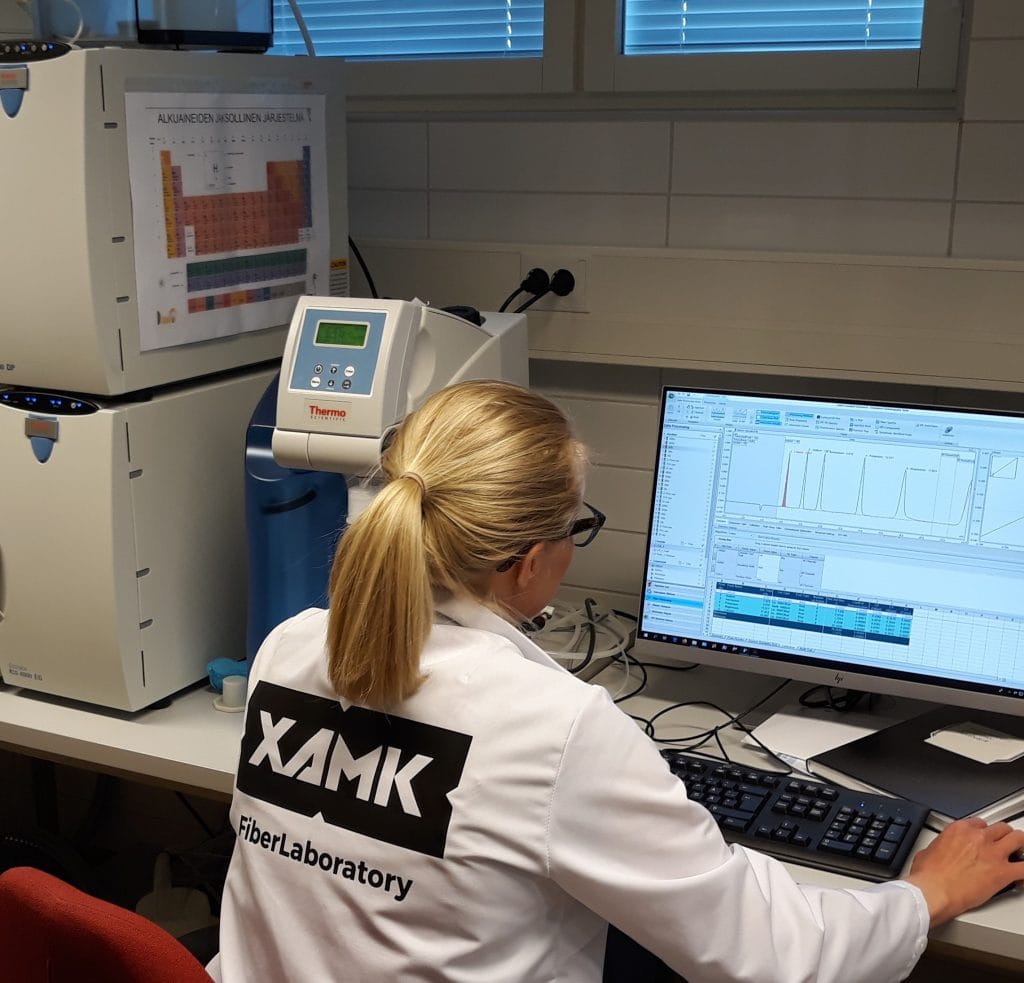
WP 3. Analytical concept and criteria of functional water control of a biorefinery
WP 4. Modelling and calculation development
WP 5. Progress of regional circular economy by developed technologies
WP 6. International co-operation
WP 7. Project management, reporting ja informing
.
.
Objectives
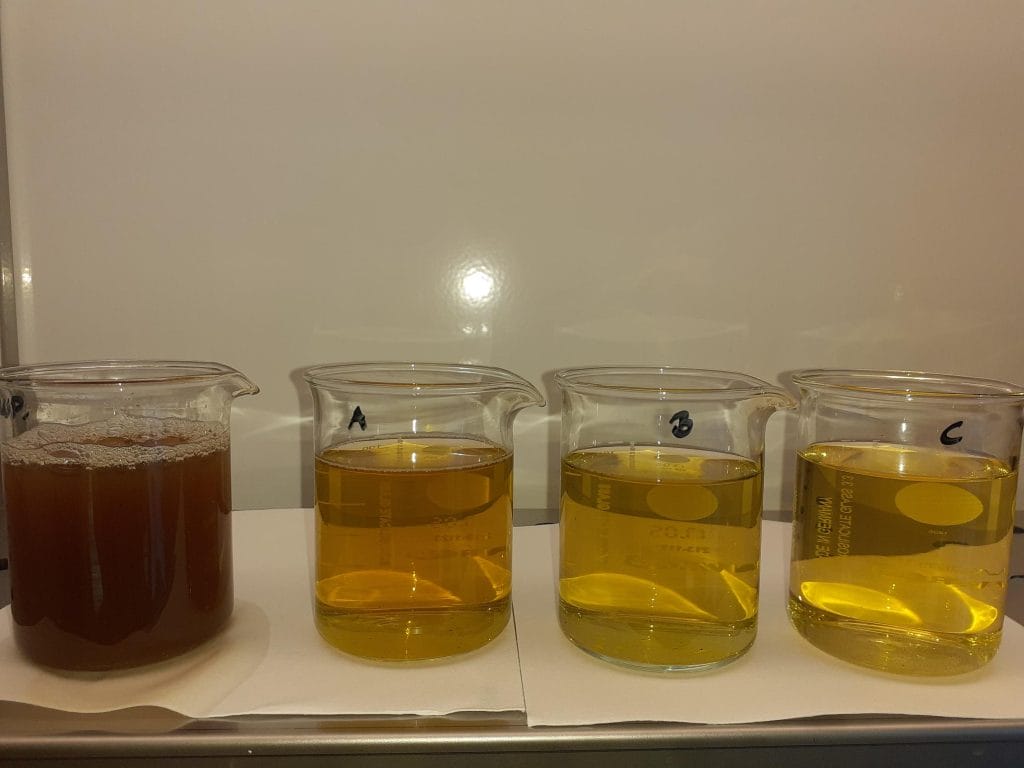
The main goal of the FunWaterCirc project is to develop technologies that minimise freshwater consumption in forest biorefinery environments, following circular economy principles. Various purification techniques are researched, piloted, and tested. Advanced analytics are used to determine the suitability of recycled water within processes to validate the “Functional Water” concept.
The result is a platform for process water innovations and for the separation and recovery of organic and inorganic substances from process and wastewater, creating value-added pathways for the fertiliser and specialty chemical industries.