



Digital Towers Can Secure the Future of Finland’s Smaller Airports
HELSINKI, Finland – A study co-funded by the European Union together with public and private entities is part of a project Growth from Modern Air Traffic to Eastern Finland. This study was carried out by South-Eastern Finland University of Applied Sciences/Logistics and Seafaring RDI Unit (XAMK) together with Independent Business Group Sweden AB (IBG). It concludes that Digital Towers can offer a sustainable future for Finland’s smaller airports by enabling shared, remotely delivered Air Traffic Services
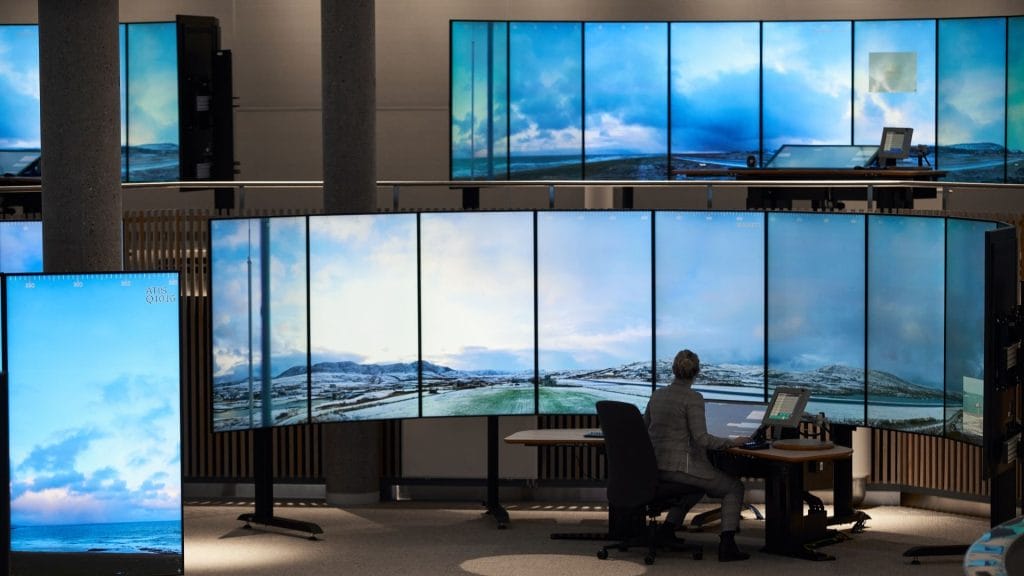
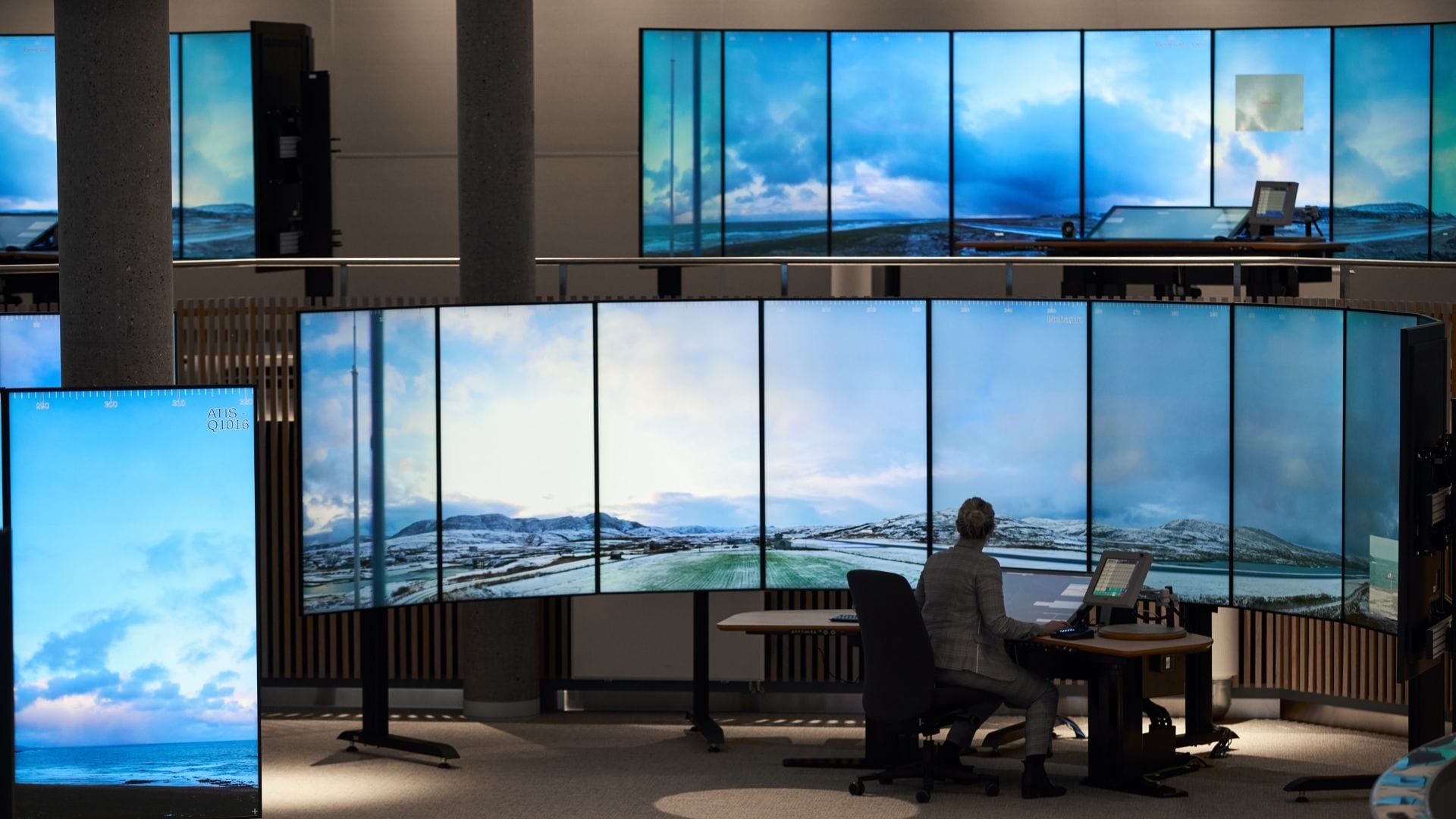
Unlike conventional towers that require on-site staffing, a Digital Tower uses high-definition cameras and sensors to deliver a live, certified “out-the-window” view to operators at a remote centre. A single team of air traffic services officers can support multiple airports from one location – significantly reducing per-airport costs and making it more affordable for communities to keep their local airport open. The study team visited Seinäjoki, Mikkeli, Lappeenranta, and Helsinki-East (Pyhtää), and benchmarked comparable European airports.
The business case is strong, yet adoption has stalled. The study identifies a “transition gap”: maintaining current operations is lower cost in the short term, while digitalisation demands upfront investment – even though it cuts long-term staffing costs. “It was interesting to see that also the experts conducting the study concluded that local airports, often municipality-owned, must adopt a long-term infrastructure vision,” says Eija Joro (XAMK). “Otherwise, they remain locked into expensive, outdated models.”
The report also frames digitalisation as a matter of national security. While cost management is a local concern, a connected, digitalised airport network strengthens Finland’s crisis readiness – an argument that carries particular weight in today’s geopolitical climate. “The state is the primary beneficiary of a resilient airport network. Even at around €1 million per installation – a fraction of a kilometre of highway – the investment case is hard to argue against,” says Kim Silander (IBG), the report’s author.
To close the gap, the study recommends a national investigation into models that could co-finance the transition and extend digitalised services to smaller airports which are unlikely to make the investment on their own. The technology is ready and endorsed by regulator Traficom. What remains is the political decisiveness to finance the transition.
Key findings
- Shared services: Digitalisation enables airports to pool resources, making low-traffic sites economically viable.
- Lean solutions: Small airports should prioritise “good enough”, compliant technology over over-engineered systems.
- Future-ready: Digital infrastructure is a prerequisite for the coming wave of drones and electric aviation.
Contacts
About the survey:
Kim Silander, Founder
Independent Business Group Sweden AB
+46 763 250 932
kim.silander@ibg.aero
About the project:
Eija Joro, Project Manager
South-Eastern Finland University of Applied Sciences Xamk / Logistics and Seafaring RDI Unit
+358 50 311 2237
eija.joro@xamk.fi
Also check out these articles

Xamk attracts applicants from across Finland – one quarter of first-choice applicants come from Uusimaa

Applicant Numbers for Xamk’s English-Language Degree Programmes