




TUHTO
Managing and Utilizing Damaged Trees
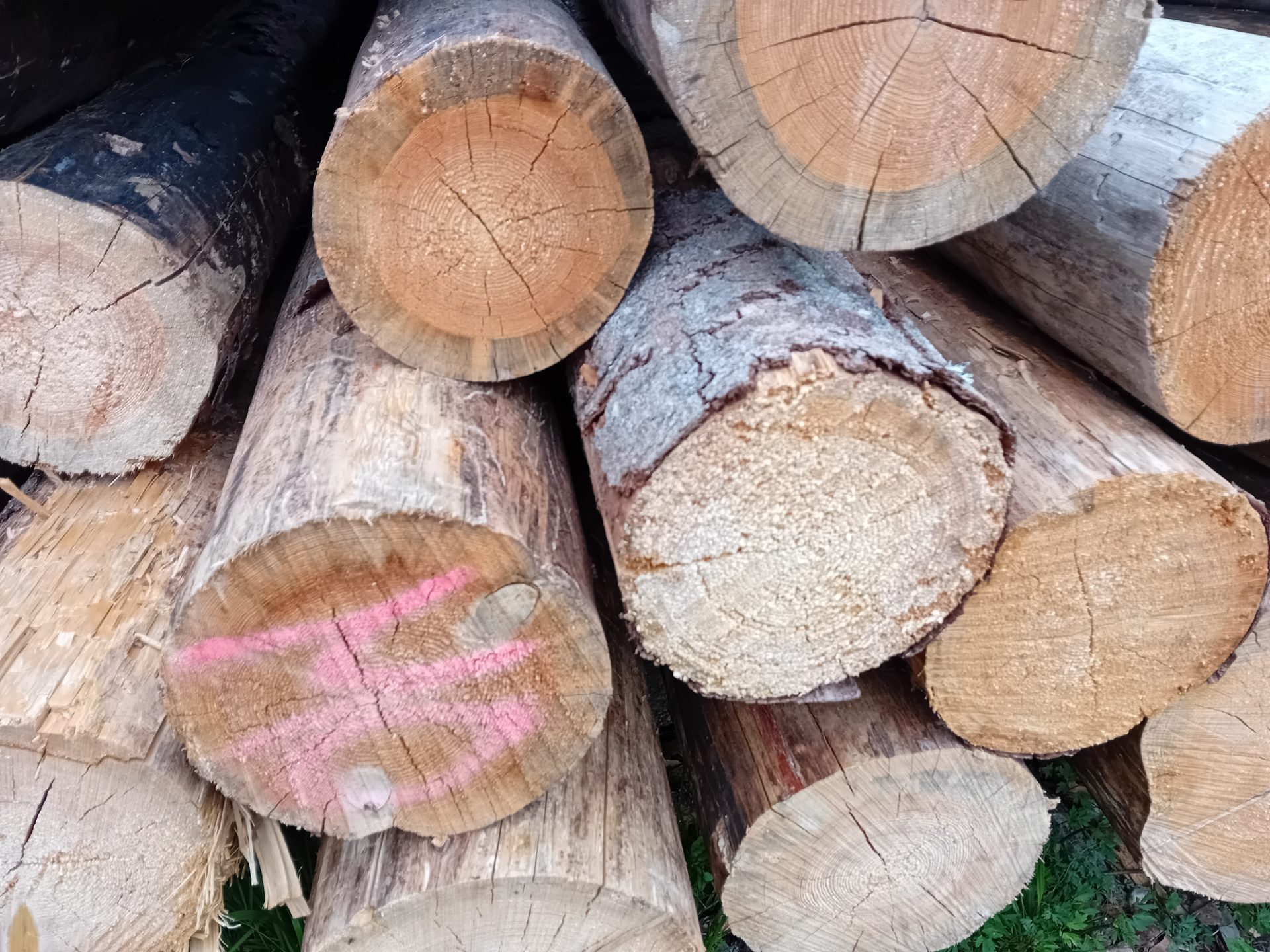
Climate change increases the risk of destruction of forests. Spruce trees damaged by the letterpress, in particular, require the investigation of the processing possibilities of the destroyed trees as well as ways to improve procurement and harvesting logistics.
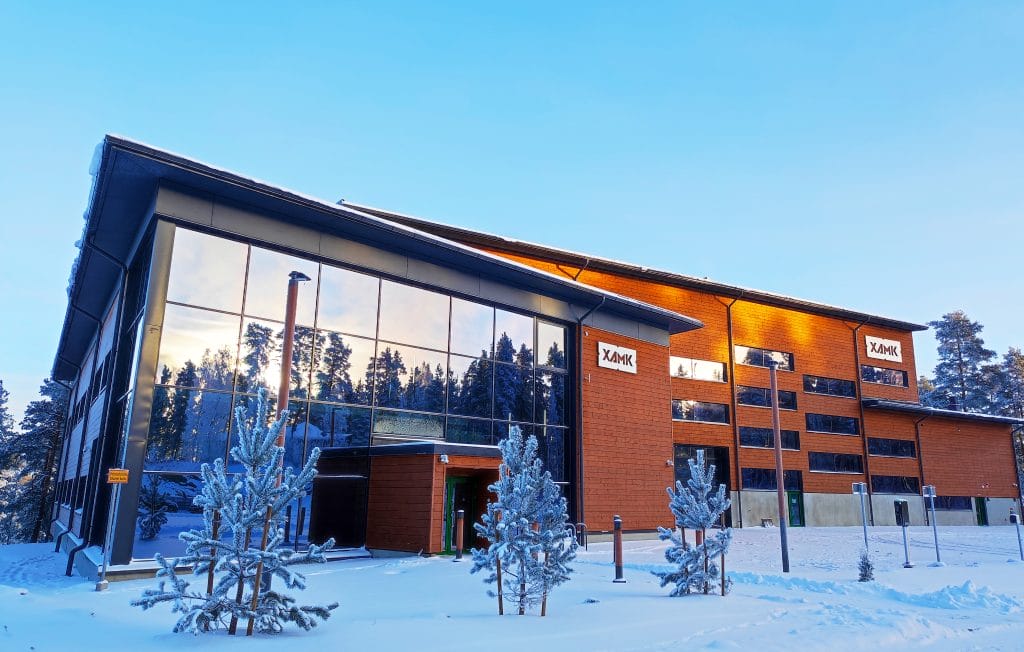
The project is implemented in cooperation with Xamk University of Applied Sciences of Southeast Finland and The Finnish Forest Centre
We are finding out the processing possibilities of destroyed trees into wooden construction products
Project goals
The main goal of the project is to find out the processing possibilities of trees of various degrees of destruction, especially the spruce destroyed by the printer, into strength-graded lumber and wood construction products (e.g. CLT, other construction products).
In addition, the goal is to find out ways to improve the procurement and harvesting logistics of wild wood sites and to produce recommendations for using wild wood safely and efficiently in the processing of the highest possible added value.
Research into the further processing potential of damaged trees is important for Etelä-Savo’s forest industry know-how and valuable forest assets in terms of their utilization.
Projects central work packages and procedures
WP 1 Test timber selection and acquiring
WP 2 Damaged timber repairing and restoring, logistical impacts and processing impacts
WP 3 Laboratory-scale production studies on the production of damaged timber (spruce logs) to further viably refined end products in order
to determine their potential
WP 4 Damaged timber utilization demonstrations and tests in various wooden timber end products.
WP 5 Damaged timber risk management and operating models in processing chains
WP 6 International cooperation
WP 7 The management of the project, reporting and messaging.
More information



TUHTO – Managing and Utilizing Damaged Trees
Info
Budget
Project Partners






TUHTO
Climate change, rising temperatures, and increasingly prolonged heat and drought periods are expected to increase the risk of forest damage in the future. Damage caused by the bark beetle is already a significant risk, particularly for spruce, and forecasting these damages as well as researching the potential for further processing of various types of damaged wood is crucial for utilizing South Savo’s forest expertise and valuable forest assets. When damaged timber is harvested, it may be classified as rotten, which significantly reduces its value to landowners— sometimes by 2-3 times less than the value of timber from unblemished logs. There is already a substantial amount of information available about identifying damaged wood and the causes of such damage within the forest sector, and small sawmills are already using dried damaged spruce in their operations. However, it is essential to obtain more experimental and practical knowledge about the logistics of harvesting damaged wood and the usability of various grades of damaged wood in further processing industries.
The primary goal of the TUHTO – Managing and Utilizing Damaged Trees project is to investigate the processing possibilities of various grades of damaged wood, particularly spruce affected by bark beetles, into strength-graded sawn timber and wood construction products
(LVL, plywood, CLT, and other building products). Additionally, the project aims to explore ways to enhance the procurement and harvesting logistics of damaged wood and to provide recommendations for safely and efficiently utilizing damaged wood to achieve the highest possible added value in processing.
The project is carried out through a collaboration between Xamk (South-Eastern Finland University of Applied Sciences) and the Finnish Forest Centre. Xamk is the main executor of the project, while the Finnish Forest Centre is a partner responsible for acquiring the research timber and leading this work package.
The Finnish Forest Centre will collaborate with both Xamk, the Finnish Sawmill Entrepreneurs Association (Suomen Sahayrittäjät ry), and other project stakeholders. The project’s activities include acquiring research timber (from three damage levels) and analyzing the costs of timber harvesting and logistics. A major focus of the project is product research to determine the processing potential of damaged wood for the construction product industry, including detailed product-specific and material studies for sawn timber, veneer, CLT, and building components from the perspectives of manufacturing and quality control. Key variables examined include strength, color, machinability, adhesiveness, and surface treatment properties. Additionally, the project will implement forest damage reporting, skills development, and strengthen international cooperation in the sector