

- Article
- Experience
- News
- Personal story
- Press release
In Game Design, ideas turn into playable experiences
This article also available in Finnish: https://www.xamk.fi/game-designissa-ideat-muuttuvat-pelattavaksi-kokemuksiksi/
Game Design is not just about coming up with a good game idea. A designer also needs to look at the game from the player’s perspective: What does the player do? Do they understand what they are supposed to do? What makes the experience engaging?
These are exactly the kind of questions explored in the Bachelor of Culture and Arts, Game Design degree programme. Students learn to design game mechanics. test their solutions in practice and develop them based on playtesting. The studies also cover areas such as 3D modelling, programming and the business side of games.
Suvi Pylvänen is responsible for the Game Design, Game Art and Virtual Production degree programmes at Xamk. Her work includes planning and coordinating the degree programmes as well as teaching. One of the things that makes the game industry particularly interesting is its continuous development.
-You need to constantly keep your eyes and ears open and follow what is happening in the industry and what is coming next. We are continuously learning and developing something newm says Pylvänen.
Students start making games from the first year
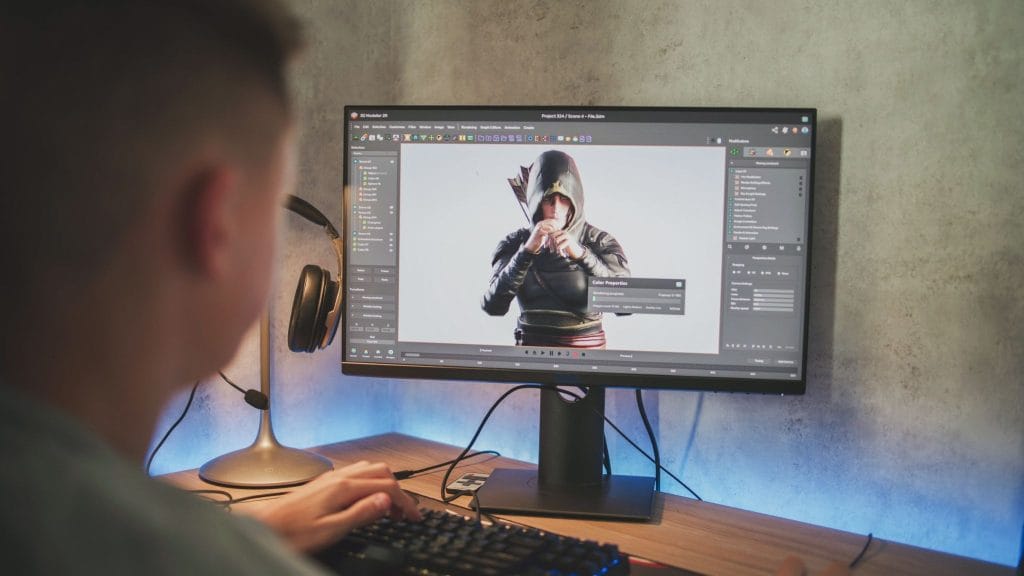
Hands-on work plays a key role in Game Design studies right from the beginning. During the first year, students create several smaller games. In the second year, the focus shifts to a larger group game project where skills and knowledge from different courses come together around the same project. Project work also continues during the third year.
Student projects can vary greatly. Many students want to create PC games, but the studies can also involve projects such as mobile and VR games. The aim may be to develop a project far enough for the finished game to be published.
Projects often begin with a given brief or certain parameters. Within these boundaries, however, students have plenty of freedom to develop their own ideas and solutions. The same starting point can therefore lead to very different games.
-Even when the starting point is the same, students come up with very different and creative solutions, Pylvänen explains.
Students are also encouraged to form their own teams and work on projects outside their courses. Sometimes a project that begins during the studies continues even after the course has ended because the student team wants to develop the game further.
Demo Day brings projects in front of audiences and industry professionals
Making games is not only about reaching a finished result. Learning to test, evaluate and improve what has been created is equally important.
At the end of each semester, Demo Day gives students an opportunity to showcase their projects and test them with other students. The programme also includes pitching game projects, and game industry professionals provide feedback on the student’s work.
Connections with the industry are also reflected on other parts of studies. Students take part in company visits and hear from guest speakers, while industry professionals participate in Demo Day events. Ongoing dialogue with the game industry also helps keep the content and focus of the studies up to date.
Who is Game Design for?
Game Design could be for you if you are interested not only playing games, but also in how and why they work. The studies combine creativity, analytical thinking, hands-on game projects and teamwork. Previous experience in game development is not necessarily required
Building your own skills profile during the studies
Although students gain an overall understanding of the different areas involved in game development, they do not need to master everything to the same degree. As the studies progress, students can build a skills profile that reflects their own strengths and interests.
Groups are formed with the aim of bringing together students with different strengths. This allows everyone to contribute their own expertise to a project while learning from others. Professionally oriented elective studies allow students to deepen the skills that best support their own career goals. The practical training and thesis also provide opportunities to specialize in areas of personal interest.
The aim is to build a skills profile in which students have a basic understanding of the different areas of game production combined with deeper expertise in one or more areas that particularly interest them.
The game industry needs team players as well as technical skills
According to Suvi Pylvänen, Game Design is suitable for someone who is interested not only in games but also making them. Playing games can be useful, but what matters most is an interest in how games are built and why particular design choices work.
Game Design requires creativity, but also analytical thinking. Designers need to be able to break large concepts down into smaller parts and examine them critically. Since games are often created in teams, it is also important to be able to discuss your ideas with others.
Previous experience in areas such as game development, programming or visual design is not necessarily required. Being proactive and having some previous experience can be beneficial when applying, but what matters most is a willingness to learn and a genuine interest in the field.
During the studies, students may also come to realize just how important communication and teamwork skills are in the game industry. Technical skills matter, but the success of a project also depends greatly on communication and the ability to work as part of a team.
Creative, analytical and a team player. That’s who Game Design is for.
Skills and portfolio for the future
Graduates can pursue a wide range of roles in the game industry. The degree can lead to careers such as game designer or level designer, while graduates have also found employment in production and quality assurance roles. Some have gone on to establish their own indie game studios.
At the same time, the tools used to create games are developing rapidly. Prototyping and testing ideas becoming easier, allowing game designers to experiment with different solutions more quickly than before. At the same time, portfolio work is expected to be increasingly polished and to demonstrate the designer’s own design process and thinking.
Students develop their technical skills throughout the programme, but Suvi Pylvänen sees the ability to carry projects through to completion, work effectively in teams, and analyze and justify design decisions as equally important.
A long tradition and an international student community
Xamk has offered Game Design education since 2013. Suvi Pylvänen also sees the international student community as one of the strengths of the degree programme, with students learning not only from their teachers but also from another.
Students can develop in-depth Game Design expertise while gaining a broad understanding of the different stages and areas of game production. The projects also result in concrete work samples that students can include in their portfolios.
Suvi Pylvänen has a simple message for anyone considering applying:
-If you can demonstrate passion and a genuine desire to work in the industry, you should apply.
Would you like to create games and understand what makes them work? Explore the Game Design degree programme and take your first step towards a career in the game industry

Bachelor of Culture and Arts, Game Design

Advanced Practice Nursing in Acute Care

Bachelor of Business Administration, Business Analytics

Bachelor of Business Administration, Digital International Business
Also check out these articles

Business Analytics combines data skills with business understanding
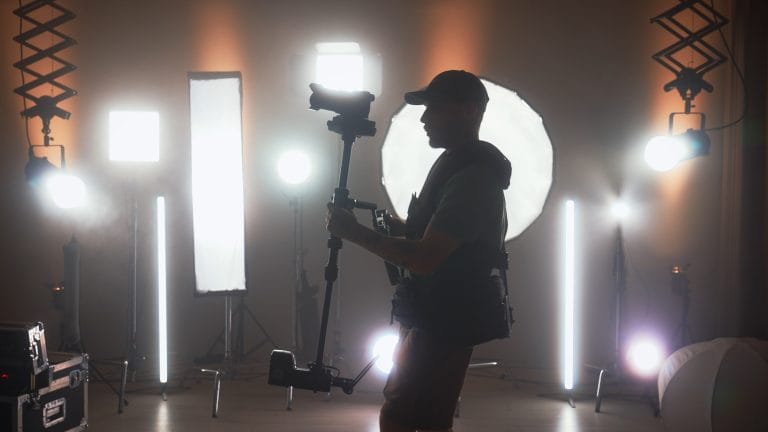
Virtual Production combines creativity and technology to create new kinds of productions