


SOSREW
Sustainable Organic Sorbents from Recycled and Waste Wool
The goal of the project is to reduce the amount of raw wool, recycled wool, and byproducts of wool production that end up as waste by developing sustainable, reusable, and easy-to-handle oil-absorbent products made from wool fibers.
To ensure the usability and deployment of the products, the product development process includes absorption capacity testing, user testing, and supply chain modeling.
The use of waste wool and recycled wool as an oil absorbent.
Core content of the project
In oil spill response and cleanup, there is a heavy reliance on plastic-based disposable absorbent products, the use of which generates large amounts of oily waste that is difficult to dispose of in an environmentally sustainable manner. At the same time, valuable natural materials, such as wool, are still underutilized. In Estonia, up to 90% of the wool produced ends up as waste, while in Finland the figure is over 50%.
The SOSREW project brings together stakeholders from across the value chain to jointly develop a more sustainable alternative: a product or products used for oil absorption, made from raw wool that would otherwise end up as waste and recycled wool textiles. These natural fibers have proven effective in preliminary absorption tests. However, their use remains limited due to a lack of functional supply chains, scalable processing methods, and coordinated service models. The goal of the SOSREW project is to change this situation by building and testing regionally coordinated, interoperable value chains that enable the production and use of wool-based absorbent products on a larger scale.
The project combines materials testing, product prototyping, and logistics development with the principles of the circular economy and service design. The project is developing two parallel service models: one based on discarded raw wool and the other on recycled wool textiles. These models will be piloted in cross-border contexts, particularly between Finland and Estonia, with active participation from key stakeholders in the fields of wool processing, material production, manufacturing, retail, logistics, oil spill response, and environmental technology.
The project consists of three work packages:
WP 1 Potential of Organic Fibers in Sustainable Sorbents
WP 2 Concept Development, Product Development and Prototyping for Sustainable Wool Products
WP 3 Service Model Development – From waste to solution
News
From Recycled and Waste Wool to Oil Spill Recovery: What the tests revealed
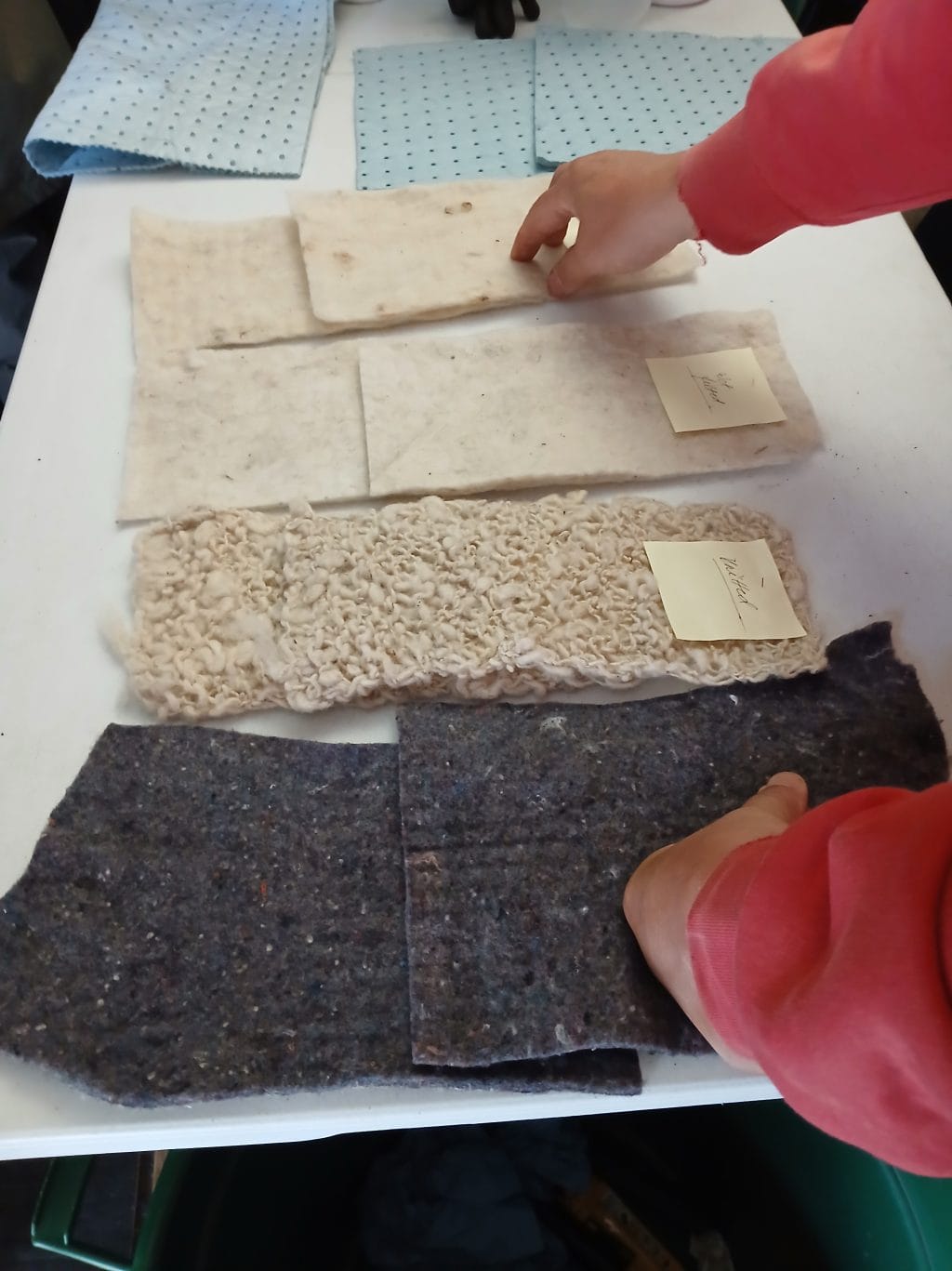
In September it was possible for our project team to test could sheep wool that usually remain unused help clean up oil spills. This was tested during a joint cross-border day at Xamk’s Oil Spill Response Testing Facility in Kotka, Sunila.
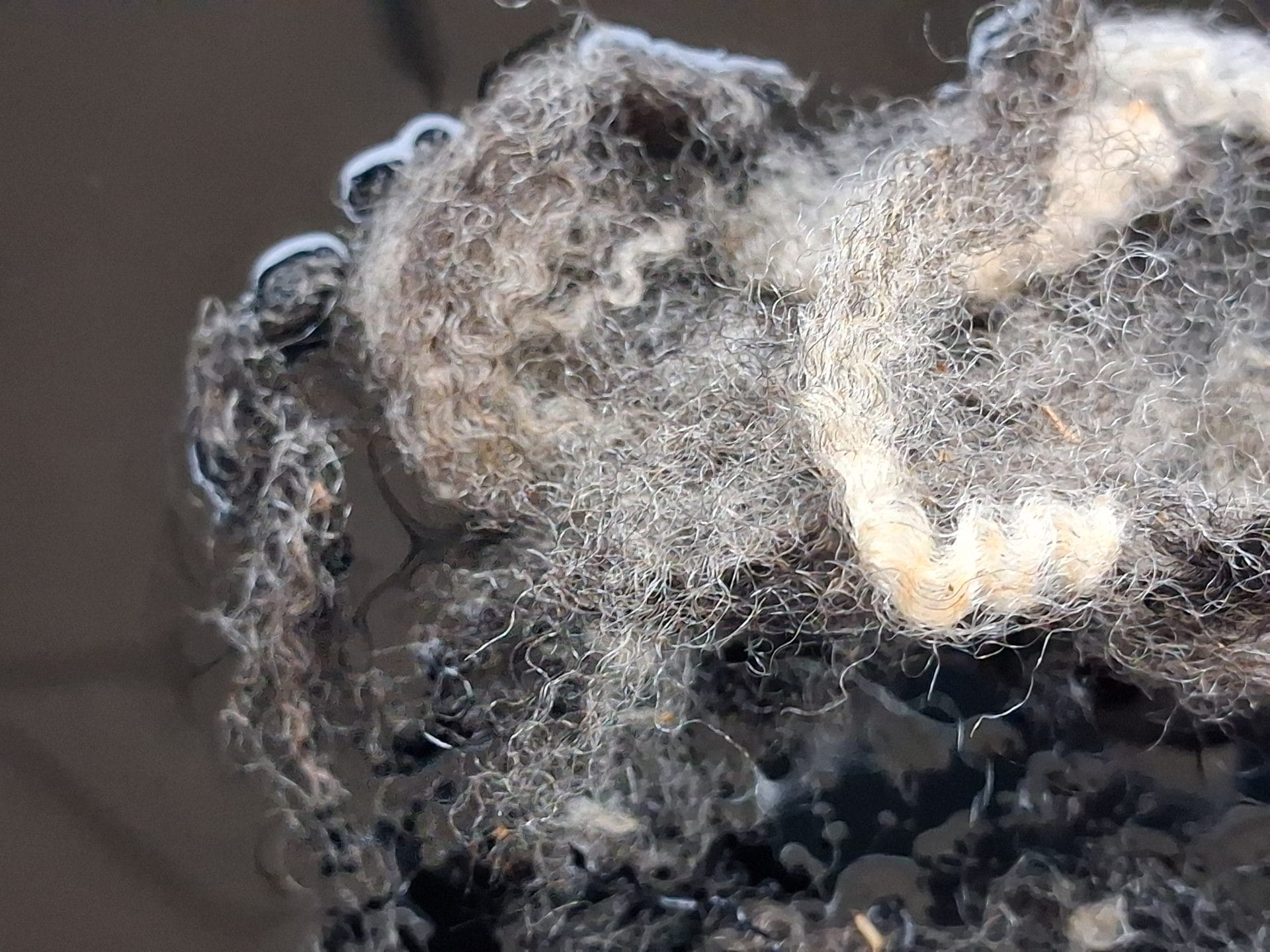
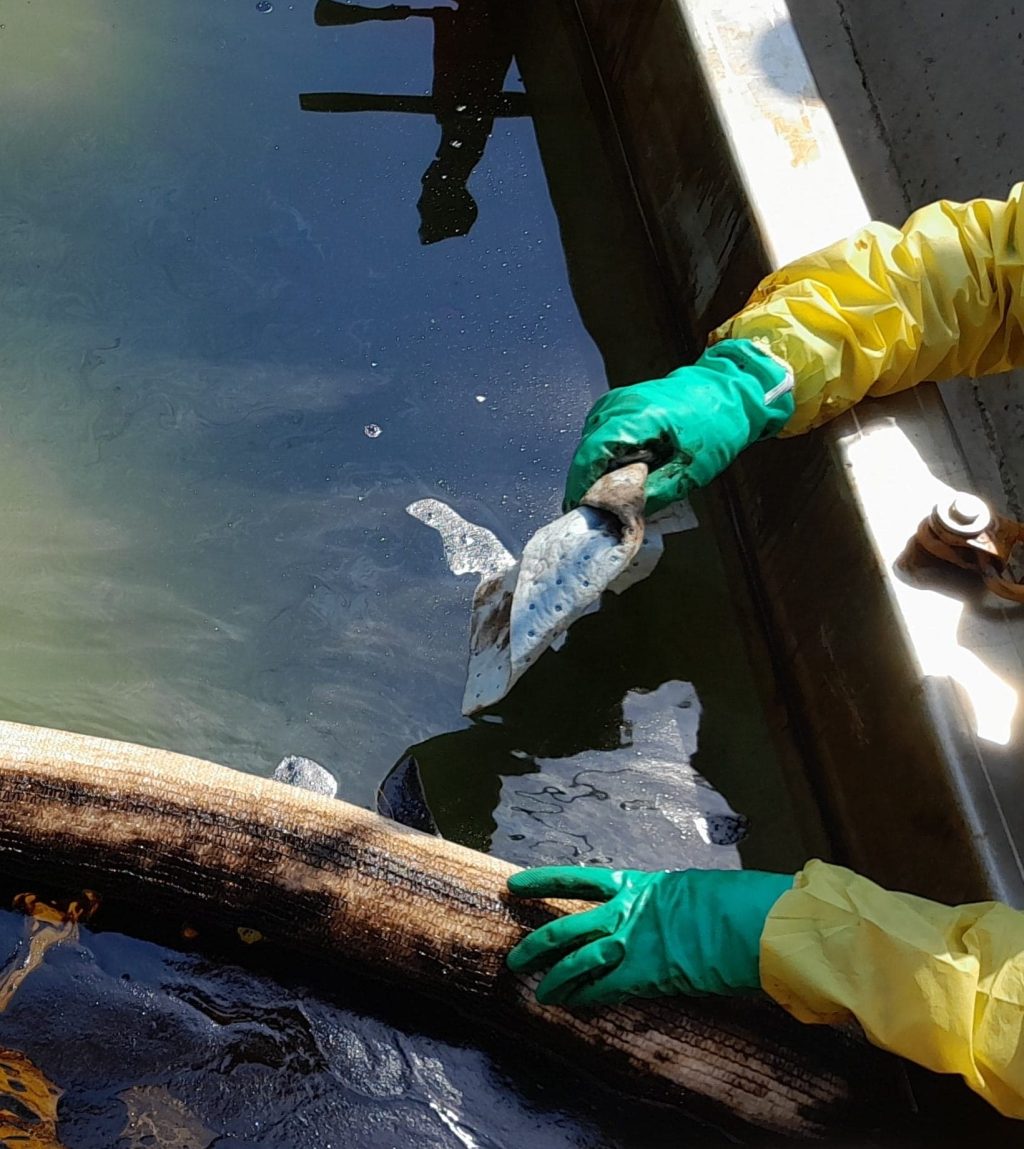
The tests showed that sheep wool can absorb large amounts of oil with raw and fiberized forms performing particularly well with hydraulic oil and renewable diesel – sometimes more than ordinary polypropylene. Both the raw material and the way it is processed can strongly influence the result.
The tests confirmed that waste wool could offer promising raw material for more sustainable oil absorbent products. Further testing with different oil types, larger samples representing a wider range of wool qualities and reuse cycles will help determine how these materials could perform in real-world oil spill cleanup operations.
The hands-on testing strengthened participants’ understanding by allowing them to observe and evaluate the materials’ performance in practice. The testing will continue with additional oil types, larger samples and further reuse trials.
SOSREW Project Kicks Off with Finnish-Estonian Collaboration
The kick-off meeting held in May 2026 marked the official launch of the project and the start of cooperation between the Finnish and Estonian partners. The meeting went through the project’s objectives, operating model and schedule and confirmed the responsibilities of the partners in different work packages. In addition it was agreed on the launch of the first measures, preparations for material testing and the project’s reporting practices. The kick-off meeting created a common vision of the implementation of the project and strengthened the commitment to the goal of developing wool-based circular oil absorption products as well as supply chains and service models that support their production. The first pilot actions of the project were launched based on the meeting.
The project will begin on May 1, 2026
The project funding has been secured, and the project will start on 1 May 2026.
Xamk’s role in the project
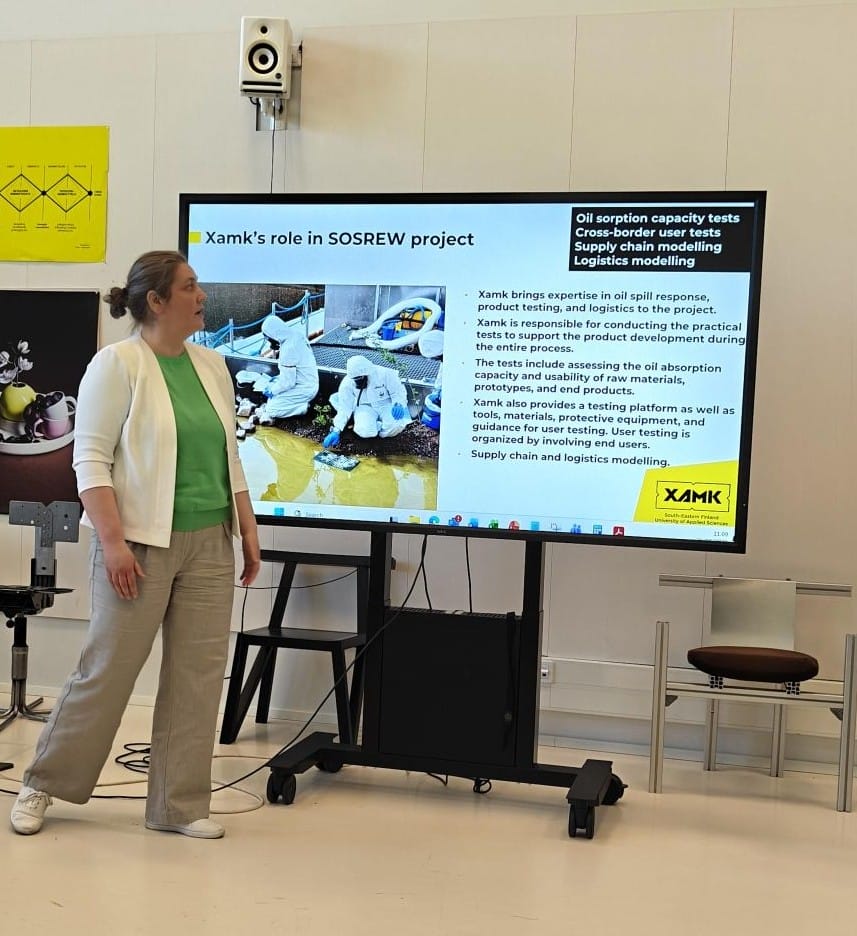
Xamk brings expertise in oil spill response, product testing, and logistics to the project. In addition to the overall coordination of logistical aspects, Xamk is responsible for conducting the practical tests. The tests include assessing the absorbency and usability of raw materials, prototypes, and end products.
Xamk also provides a testing platform as well as tools, materials, protective equipment, and guidance for user testing. User testing is organized by involving end users in the process.
First, the absorbency of waste wool and recycled wool fibers will be tested using various oils, with other organic fibers and synthetic absorbents serving as comparison products. Fiber types that demonstrate sufficient absorbency will proceed to the concept phase.
Additional tests will be conducted on prototypes to determine their absorption capacity, as the product’s shape and structure can affect its ability to absorb oil. The tests will also include reusability tests to assess the durability of the designed products. The tests also help determine the potential for waste reduction
Supply chain management is also significant for the final outcome. Xamk is responsible for modeling the supply chains. Modeling is performed for both service models —waste wool and recycled wool— including descriptions of material procurement, collection, sorting, storage, and distribution.
Xamk’s activities
WP1 Potential of Organic Fibers in Sustainable Sorbents
Activity 1.4 Oil sorption capacity tests for raw materials
Conventional synthetic sorbents and other organic fibres are used as reference items. Sorption capacity is assessed in relation to oil types that pose a risk to the marine environment of participating countries, such as marine diesel oil. Tests are conducted using specialised test tanks filled with water with oil on the surface as well as in plain oil. The hydrophobicity of the fibres, which affects their usefulness in marine spill response operations, is also assessed. The fibres and textures that demonstrate the highest oil absorption capacity will be selected for further development in upcoming phases and subjected to joint cross-border practical trial involving all partners.
Xamk will carry out experimental trials to study the oil absorption or adsorption capacities of recycled wool fibres and waste wool in both scoured and unscoured forms. The materials used in this first testing phase will be in the form of loose fibres, as well as fibres in various compositions and textures produced as a result of the material experiments and pre-design pilots carried out in Activity 1.3.
Implementing the activity requires purchasing test oils, providing personal protective equipment, and ground protection materials, as well as ensuring the correct disposal of used oil, the resultant oily water, and oiled materials. The raw materials to be tested will be sourced from the partner sheep farms, which provide the raw fibres, as well as from the first prototype textures resulting from Activity 1.3.
Reference materials will be purchased from the open market.
Xamk will take responsibility for the activity, and other partners will participate in a joint cross-border test trial to ensure feedback is gathered for the iterative design cycles. Tests are conducted at Xamk’ s oil spill response testing facility in Kotka alongside partners’ meeting.
Result 1.4 Test report on the oil sorption capacities of waste wool and recycled wool fibres
This report provides test results from the oil sorption capacity tests of fibres in their raw state and the first experimental textures. These results will serve as the baseline data for further steps in the product development process.
WP2 Concept & Product Development and Prototyping for Sustainable Wool Products
Activity 2.3 Sorption capacity and cross-border user tests for sorbent prototypes
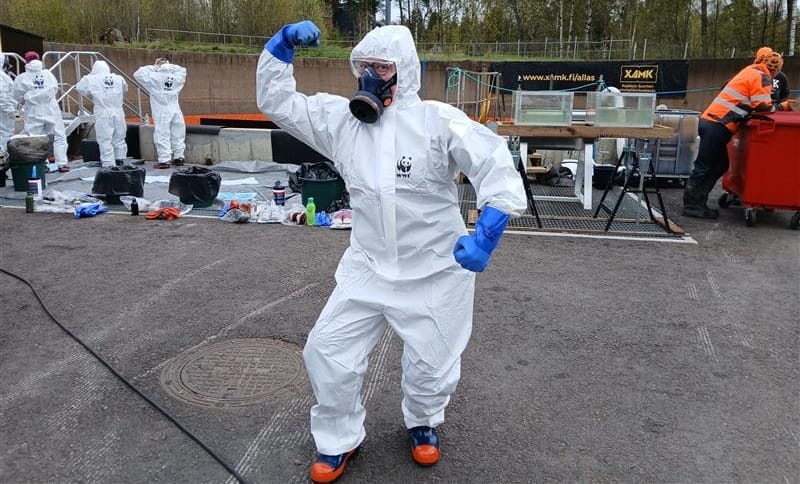
During the iterative product development process, the oil sorption capacity of waste and recycled wool sorbent concepts will be tested. These tests will be carried out on each concept prototype, as its texture (felted, knitted, woven, etc.), shape and design may affect its ability to retain oil. The hydrophobic features will also be studied. The sorption capacities found (either adsorption or absorption) are compared with those of existing synthetic sorbent products to assess the potential of wool-based sorbents to reduce the amount of oily waste in the event of a marine oil spill. It is estimated that for every ton of oil spilled, ten tons of waste are generated. This is partly due to the use of sorbents: most existing sorbents are polypropylene-based and single-use, resulting in a significant amount of waste. Previous small-scale studies (Kettunen et al., 2022; Kettunen, 2023) have suggested that replacing single-use materials with more durable products could have a positive impact on waste volumes. These tests will verify the strength of this impact. Additionally, the usability of the prototypes will be verified through hands-on testing with end users. These tests will evaluate the prototypes’ efficiency, usability, ergonomics, reusability, and durability. Reusability will be assessed by observing the durability of the items, how they withstand wear and tear, and their ability to remain absorptive after repeated use. Reusability is a key factor in achieving waste reduction targets. The tests are carried out at Xamk’s oil spill response testing facility in Kotka, Finland. Xamk is responsible for their implementation. Other partners and stakeholders who have an end-user role, such as voluntary oil spill response troops, will take part in the testing events. End users who have confirmed their participation include members of the voluntary oil spill response troops from WWF Finland, the Estonian Fund for Nature, and the Estonian Voluntary Sea Rescue Team.
Result 2.3 Report on the sorbent prototypes’ sorption capacity and user test results.
A report presenting the results of oil sorption capacity tests on the designed concepts for raw and recycled wool sorbent prototypes including findings and recommendations from hands-on user tests concerning the prototypes’ usability, ergonomics, reusability, and durability.
Activity 2.6 Cross-border field tests for finalized sorbent products
This activity involves conducting final field trials on finished sorbent products in test settings that simulate real-world spill scenarios. The trials aim to verify the final absorption capacities of the end products and calculate their waste reduction potential. Final oil absorption capacity tests are carried out in a similar way to previous testing activities, providing a vertical evaluation of sorption effectiveness throughout the entire product development process. Additional to the previous scope of testing, samples of the treated water are taken and sent for laboratory analysis to assess the product’s effectiveness in removing oil and purifying water. The waste reduction rate is assessed quantitatively by calculating the impact of the sorption capacity and reuse times of new products, compared to the corresponding values of existing synthetic products, in relation to the amount of oil released.
Field trials provide voluntary oil spill response teams with hands-on experience of site clean-up operations and the essential skills required to utilise new, sustainable oil sorbents. Working under the supervision of expert trainers who demonstrate the proper use of products and suitable recovery methods, volunteers learn safe working practices.
These practices are documented to establish standard operating procedure (SOP) guidelines for sustainable oil clean-up.
Xamk is responsible for implementing the field trials and providing the test results. Other partners and end users participate in the events. Testing days also provide an opportunity to showcase products to a wider audience.
Result 2.6.1 Report on the total performance of new products as oil absorbents. Results from final oil sorption capacity tests for finished end-products, calculation of waste reduction potential, final end-user evaluations.
Result 2.6.2 Standard Operating Procedure (SOP) for the use of sustainable oil absorbents. Includes a description of the usage of wool-based oil absorbents, their application range, how to reuse them, how to dispose of them appropriately, and safe working practices.
WP 3 Service Model Development – From waste to solution
Activity 3.2 Supply chain modelling
Logistics activities define the conditions for a functional supply chains for recycled and waste wool. A consistent material flow is crucial for maintaining production, as shortages can disrupt operations. Efficient sourcing, collection, and sorting mechanisms help mitigate fluctuations and ensure continuity. Regional sourcing and local processing reduce transportation emissions and support local economies, making it possible to collect and process wool waste near its origin. This approach also helps preserve regional wool industries and minimize environmental effects.
Optimizing logistics is key to minimizing the environmental footprint. This includes designing transport routes that minimize distances and emissions, as well as coordinating schedules to optimize efficiency. A material flow tracking system is essential for transparency and traceability.
Depending on the scale, stakeholder involvement, and available resources, such systems can be tailored to monitor volumes and performance, enabling informed decisions that support circularity.
A critical prerequisite for success is a collaborative framework involving local authorities, waste producers, recyclers, and logistics providers. The model’s effectiveness depends on shared commitment to circular economy principles: maximizing reuse, minimizing waste, and creating value from secondary resources. Aligning responsibilities across the supply chain enables stakeholders to collaborate in building a resilient and resource-efficient system.
Result 3.2 Modelled supply chains
Modelled supply chains including descriptions of material sourcing, collection, sorting, warehousing and distribution mechanisms. Addresses both material cycles, waste wool and recycled wool, taking into account the national characteristics.
Activity 3.3 Logistics Modelling and Product Performance Demonstrations
A two-day event in Kotka, organized by Xamk, brings together key stakeholders and project partners for a logistics workshop and demonstrations of product performance and usability. The event plays a central role in service model development, offering a concrete setting to test and evaluate the developed sorbent products in real-life conditions.
The first day focuses on a logistics workshop, where circular economy-based supply chains are modelled. Concepts and test results from previous work packages are utilized. Participants include logistics companies, material handlers at different stages, end-users, and other relevant stakeholders. The workshop explores systems for tracking material flows, regional processing, and transport solutions that support scalability and environmental sustainability of the service models.
On the second day, usability and performance demonstrations are conducted at Xamk’s oil spill response testing facility. Project partners, voluntary oil spill response teams, producers, and external stakeholders participate. The event also serves as a public demonstration and knowledge-sharing forum, presenting project results and collecting feedback for further development.
Result 3.3 A Summary of the Logistics Modelling and Product Performance Demonstrations. A Summary of the Logistics Modelling and Product Performance Demonstrations is compiled, including experiences, insights and recommendations.
Partners
LAB University of Applied Sciences
Contact person:
Aino Vepsäläinen
firstname.lastname@lab.fi
Estonian Academy of Arts
Contact person:
Hedi Meigas
firstname.lastname@artun.ee
MuhuMaaLammas
Contact person:
Kadri Tali
firstname.lastname@emu.ee
Contacts
Basic Information
SOSREW – Sustainable Organic Sorbents from Recycled and Waste Wool
Info
Budget
Project ID CB1000702