





- Article
- Experience
- News
- Personal story
- Press release
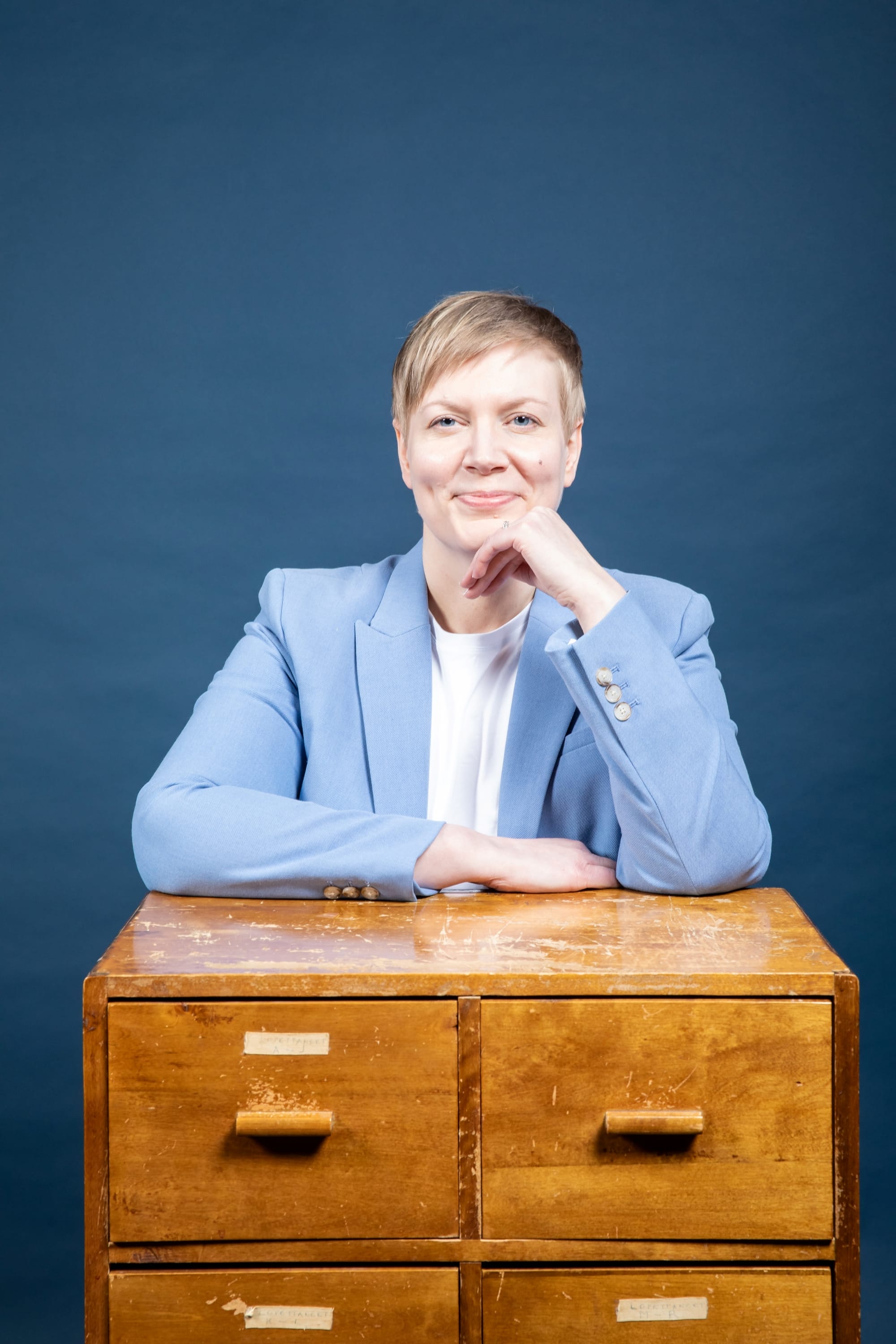
Stina Westman appointed Professor of Practice in data economy
Before taking up the professorship, Westman served as Director of the Research Centre for Digital Information Management Digitalia at Xamk. She has also worked at CSC – IT Center for Science, among other organisations. Westman received her doctorate from Aalto University in media technology in 2011.
The Professor of Practice in data economy is a five-year professorship that brings together academic research and the practical needs of working life. The professorship is funded through donations and has been supported by Disec Oy, Xamk, the City of Mikkeli, Co-operative Suur-Savo and the Small Business Center Foundation.
In addition to the Department of Industrial Engineering and Management at Aalto University, Westman works at Xamk’s Mikkeli campus. Aalto and Xamk are strategic partners and have collaborated in research and education for a long time.
Artificial intelligence is changing how we produce knowledge and what we consider reliable information.
“We are now deepening this collaboration and can further data-driven research with partners from industry. We are exploring, for example, what new services, operating models and business opportunities data can enable. We are also asking which needs data-based solutions should address and what genuinely benefits companies, public services and people,” Westman says.
Students at both institutions will gain access to thesis topics. At Aalto University, theses at all levels, from bachelor’s and master’s theses to doctoral dissertations, can address the needs and themes of the Mikkeli region. Many master’s theses are commissioned by companies, with students working on them as paid employees. Westman can also supervise doctoral studies undertaken by graduates of universities of applied sciences.
The professorship is also an investment in South-Eastern Finland. Joint research, development and innovation projects will bring even more research-based knowledge and expertise to the region for the benefit of local companies.
Intangible assets gain value in the data economy
The data economy refers to an economy in which companies and the public sector use data to develop products and services and to inform decision-making. When a retail chain recommends products or a city plans bus routes based on people’s movements, that is the data economy in practice.
The activities of millions of people, companies and institutions generate vast amounts of data. Companies use this data to create significant business value.
“We also need to discuss privacy and ethics: what data do organisations collect about us, and what can international corporations do with it? We need to consider what we receive in return for sharing our data,” Westman points out.
“In a fair data economy, we can see what information organisations use, where and on what terms. We can compare this with data protection regulation. That regulation aimed to increase trust in the use of personal data and enable the development of the digital market. Intangible assets gain value in the same way in the data economy.”
AI-generated data needs clear governance
“One way or another, my career has always revolved around the infrastructure and services that surround data, and I have studied the interaction between people and information as they make use of new technologies,” Westman says.
Artificial intelligence now enables new ways of processing data. In the data economy, technological solutions matter, but so does the so-called soft infrastructure: trust and agreements on how organisations use shared data.
“Artificial intelligence is changing how we produce knowledge and what we consider reliable information. AI already generates more web traffic and data than human users, so we need clear governance for AI-generated data,” Westman says.
“Researchers also need to examine how we, as a society, understand the value of data and its role in societal continuity and renewal. For example, memory organisations such as archives, libraries and museums are not merely keepers of the past. They are national information resources that matter for research, business, security of supply and democracy. Through my research, I aim to advance a broad understanding of the value of these information resources.”
Xamk and Aalto University Professors of Practice
In addition to Stina Westman, Xamk and Aalto University have two other joint Professors of Practice:
- Cybersecurity: Philip Ginzboorg https://www.aalto.fi/en/people/philip-ginzboorg
- Forest bioeconomy: Steven Collins https://www.aalto.fi/en/people/steven-collins
Meet the new Professor of Practice!
- Join the Memory Campus community meeting on 14 December 2026 to find out how the Professor of Practice in data economy supports companies in South Savo in making use of data and developing their business.
- You will also hear the latest news about new RDI projects and the benefits they bring to the region.
- More information (in Finnish)
For more information
Also check out these articles
Pasi Karppinen to Strengthen Xamk’s Digital Economy Research
Aalto University establishes a professorship of practice position in data economy in cooperation with Xamk
