




- Article
- Experience
- News
- Personal story
- Press release
How does breathing influence brain-body interaction in elite adolescent ice hockey players?
Breathing plays an important role in the interaction between the body and the brain. Traditionally, research has focused primarily on the physiological function of breathing, namely how oxygen is delivered from the air to the body’s tissues. Over the past decade, however, researchers have discovered that the role of breathing is far more complex than previously understood.
Understanding breathing as part of this broader system may open new perspectives on how people can regulate their performance, recovery, and wellbeing, both on the playing field and in daily life.
An ongoing study at Xamk’s Preventive Health Research Unit examines the connection between the brain and the body, often referred to as brain-body coupling. Particular attention is given to breathing, which is one of the few bodily functions that can be consciously regulated. Although breathing is known to influence heart function, stress regulation, and concentration, its impact on brain activity and the interaction between the brain and the body remains relatively poorly understood.
The brain, the body, and the environment as one system
The research is grounded in the idea that the body is not merely a system controlled by the brain. Instead, the body’s state continuously influences how the brain processes information, where we direct our attention, and how we make decisions. This perspective is known as embodied cognition, which emphasizes the active role of the body in thinking and behaviour.
.
Emotions, stress, pressure, fatigue, and arousal are all bodily states that, together with the surrounding environment, shape the way we think and act. In sports, for example, the ability to recognize and interpret internal bodily signals, a process known as interoception, is considered an important component of elite performance.
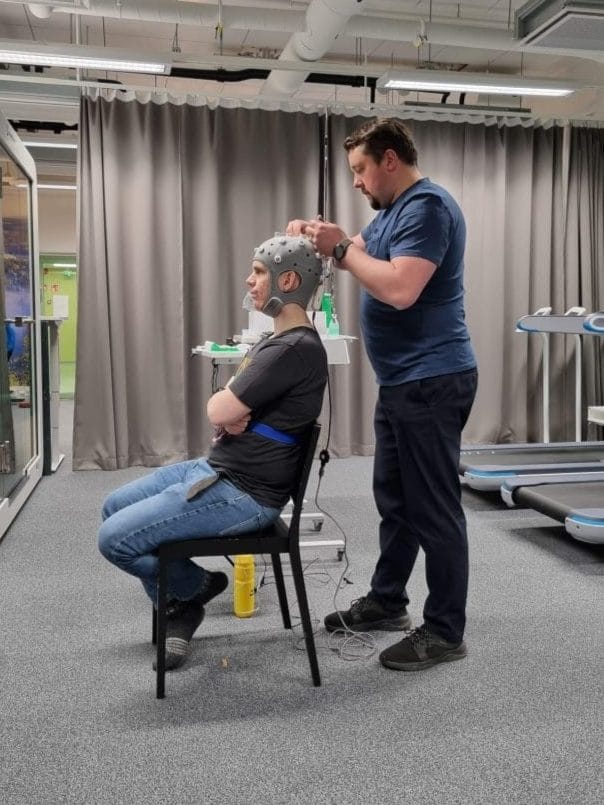
The study investigates how slow and deep breathing affects brain activity, autonomic nervous system function, and the interaction between the brain and the body in adolescent ice hockey players. Measurements include electroencephalography (EEG), heart rate variability (HRV), and respiratory recordings.
These methods make it possible to examine how activity in different brain regions changes across various phases of the breathing cycle and how regulating breathing rhythm may influence the body’s regulatory systems as a whole. Neurophysiological measurements are complemented by validated personality and wellbeing questionnaires that assess perceived arousal, emotion regulation, attentional balance, and interoceptive awareness.
New perspectives on wellbeing and performance
Although the study focuses on ice hockey players, its findings may have relevance far beyond sports. The interaction between the brain and the body plays a fundamental role in human functioning, whether in working life, education, or everyday situations involving stress and high demands.
Understanding breathing as part of this broader system may open new perspectives on how people can regulate their performance, recovery, and wellbeing, both on the playing field and in daily life.
The doctoral research is part of the three-year INGENIUM Joint Doctoral Programme and is conducted in collaboration with the Università degli Studi G.d’Annunzio Chieti-Pescara in Italy.
Main photo: Pasi Mennander / Finnish Ice Hockey Association
For more information

Also check out these articles

From Coffee to Spruce Shoots – New Paths to Growth from Local Strengths

When Technology Takes a Back Seat: AinoClub Combines Digital Tools with Hands-On Learning