


Creative Industries Research Unit
In the Creative Industries Research Unit, our playing field consists of creative methods and business. We excel at user-oriented thinking and support innovations regardless of the field.
Our research focuses on creative business and creative technologies.
We develop creative methods and business.
Digital Economy Research units:
- Digitalia
- Creative Industries
- Cybersecurity and Game Technology
Designing futures
The Creative Industries Research Unit serves developers, companies, and the educational community in the region regardless of industry.
We produce solutions in multidisciplinary teams and networks nationally and internationally.
Our research, development and innovation services connect professionals from creative industries and other fields.
Our goal is to seek future competitiveness and wellbeing through creativity and diversity.

The themes we focus on
Creative business and intangible value
For us, creative business means the ability to see value where others see only potential.
Future growth will be built on intangible capital: creativity, expertise, culture and people’s ability to imagine something new.
Bold ideas grow into new solutions, business opportunities and sustainable renewal.
Creative technologies
By combining the creative industries, technology and materials expertise, we help companies develop products, services and their future competitiveness.
We research and develop practical solutions ranging from virtual production to biodesign.
This creates intangible value, renews business across industries and increases the impact of the creative economy.
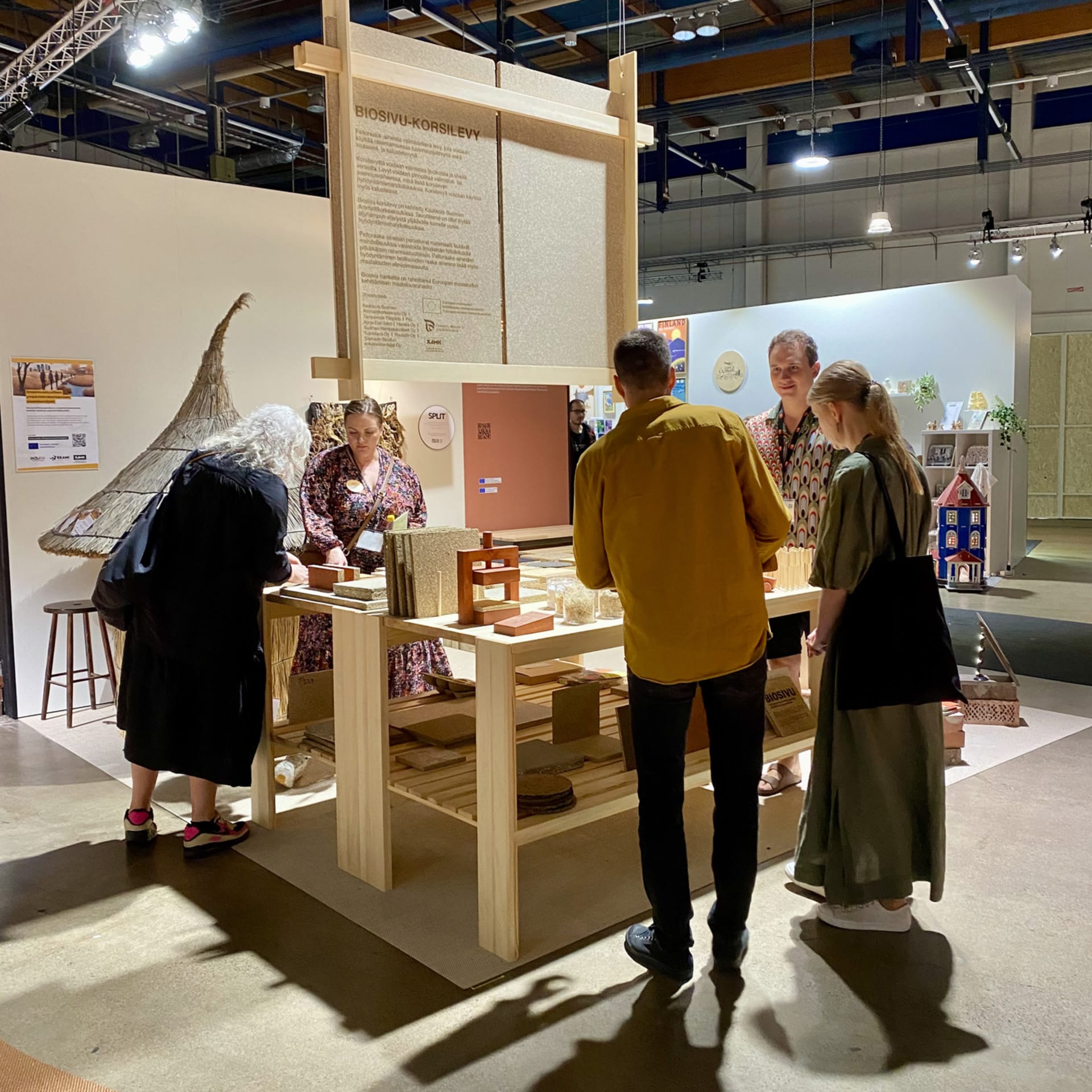
Sustainable innovations in materials, manufacturing and products emerge when we combine renewable materials, digital fabrication and traditional craft and applied arts techniques.
Our work takes tangible form through product and material experiments and environmental architecture pilots. These demonstrate how materials can be used more sustainably and in line with circular economy principles.
By placing art, design and culture at the centre, we create experiences that generate value for individuals, communities and businesses.
We renew the ways cultural heritage is used by combining design thinking, sustainable tourism and participatory urban development.
We make cultural environments attractive, vibrant and future-oriented.
Strategic design supports the transition towards more sustainable solutions.
Participatory foresight makes the future easier to understand and brings different stakeholders together to think collaboratively.
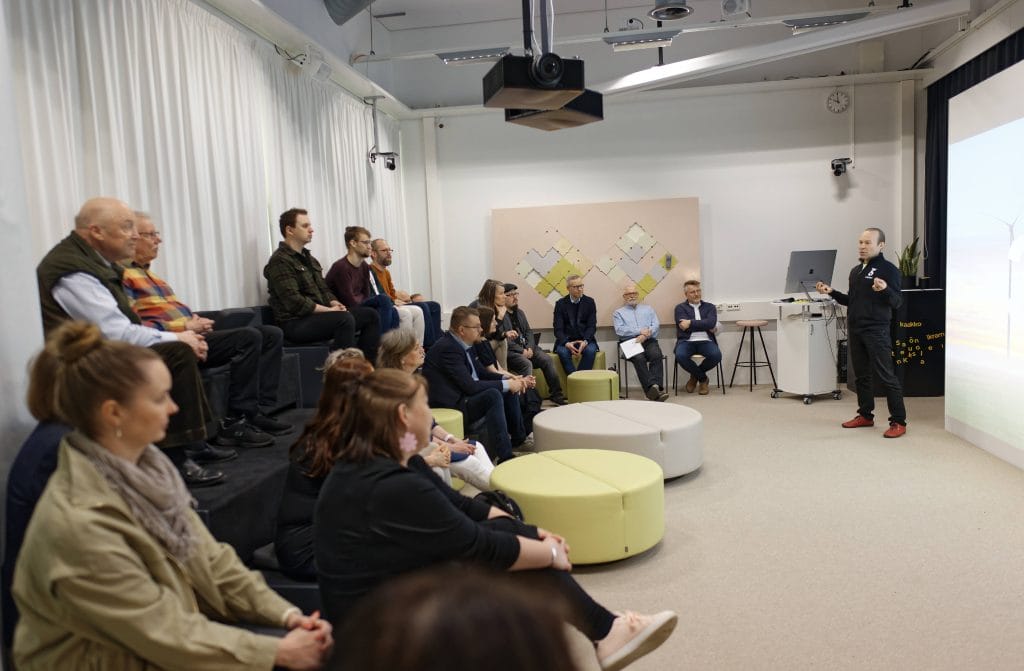
We work closely with foresight networks, and the annual Kymenlaakso Futures Workshop is an example of our long-term regional foresight work.
Creativity helps us navigate uncertainty by identifying essential questions and assessing which direction to take. Through the interplay of art and technology, we open up new ways of thinking, experiencing and putting ideas into practice.
Technology helps put creativity into practice, while art brings experiential, sensory and meaningful perspectives to development.
User-centredness, participation and an experimental approach to development are at the heart of design thinking.
Through service design, we develop digital and physical services that improve the customer experience and create genuinely meaningful value in a changing operating environment. Co-creation helps make changes understandable, acceptable and workable in practice.
We use gamification, playfulness and experiential methods in ways that strengthen engagement, learning and the impact of the user experience.
Gamification offers practical methods that support motivation, a sense of meaning and belonging.
Clear goals, roles, stories, choices and game mechanics help structure activities, make progress visible and increase participation.
For us, artificial intelligence is a tool for deepening customer understanding, making content production more efficient and supporting decision-making.
By combining data, technology and human-centred thinking, we use AI to develop new services, content and business.
We create practical solutions in which AI helps organisations structure information, test alternatives and respond rapidly in their day-to-day work.
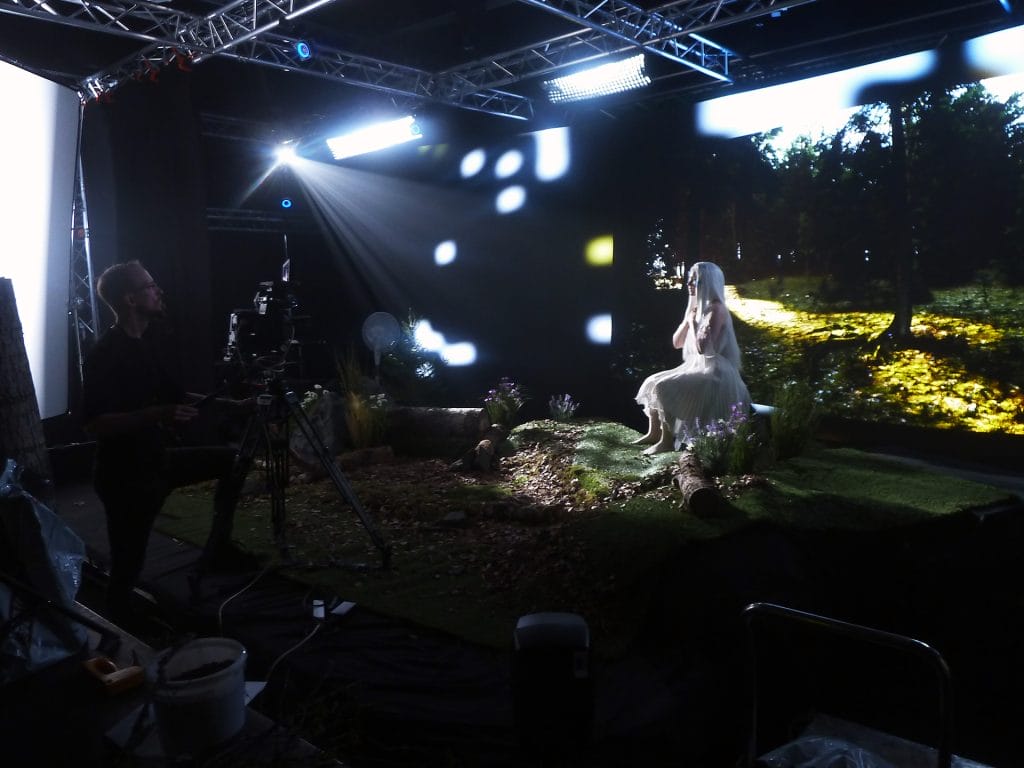
In virtual production, we combine physical spaces, real-time 3D environments and filming technology.
The physical and digital worlds merge seamlessly into a production process in which ideas can be visualised, tested and changed instantly. This speeds up iteration, reduces production risks and opens up new opportunities for immersive and visually compelling content creation.
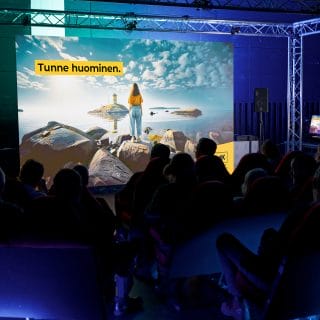
Virtual production can be used in areas such as marketing, education, events and industrial applications.
How do we conduct research, development and innovation?
As a research unit, we take a systemic approach to our work and collaborate through extensive national and international partner networks. These networks bring together public research, development and innovation (RDI) organisations and private companies. We aim to combine expertise in new, impactful ways and foster agile multidisciplinary collaboration that translates into effective research and development processes.
Are you interested in collaborating with us or would you like to learn more about us?
Applied research and practical development
We conduct applied research in close collaboration with our partners. Together, we identify practical needs and address the related research questions iteratively through prototypes, experiments and pilots.
We evaluate solutions systematically and bring together scientific knowledge, practical expertise and decision-making needs. We support development through coaching, workshops, tools and complementary expertise.
The result is research-based solutions that can be applied in practice, scaled up and shared through both professional publications and academic channels.
How we shape the future
We work with partners from public authorities and businesses to research and develop operating models. These models integrate cultural resilience and security expertise into preparedness, crisis management and day-to-day safety and security work.
Cultural resilience is the ability to recognise what matters to us and to act together, even in times of change and crisis. As part of comprehensive security, art, culture and creative technologies strengthen participation and agency.
Participation and agency provide the foundations for preparedness, crisis resilience and recovery. We also develop models for promoting wellbeing through arts and culture. These models help people cope with everyday life, strengthen a sense of community and support participation both in services and in daily life.
As part of comprehensive security, art, culture and creative technologies strengthen participation and agency.
Sustainable development is the foundation of everything we do. We consider ecological, social, cultural and economic perspectives in our research, development, partnerships and practical solutions.
The strength of the creative industries lies in their ability to influence values, identities and experiences: knowledge turns into action when people can relate to a more sustainable future and see their own role in it.
We strengthen the expertise of actors in the cultural and creative sectors and support their role as changemakers in the sustainability transition. Their role extends to advancing this transition in other industries as well.
Knowledge turns into action when people can relate to a more sustainable future and see their own role in it.
For us, digitalisation is a tool for human-centred and responsible development. We use AI, virtual production, gamification, digital fabrication methods and new technologies to renew services, content and business.
For us, technology is not an end in itself; its use is guided by ethics, responsibility and empathy. Our development work draws on an understanding of users and is grounded in participation and sustainable thinking.
Alongside the opportunities technology offers, we examine its limitations and its effects on individuals, communities and the environment. In this way, digitalisation supports meaningful experiences, better decision-making and future-proof solutions.
For us, technology is not an end in itself; its use is guided by ethics, responsibility and empathy.
Infrastructures and technologies

Future Experience Lab
Future Experience Lab
FUEL is an open learning environment and an intelligent co-development space. FUEL is a product and service development clinic that utilizes service design methods and design thinking.

Virtual Production Studio
Virtual Production Studio
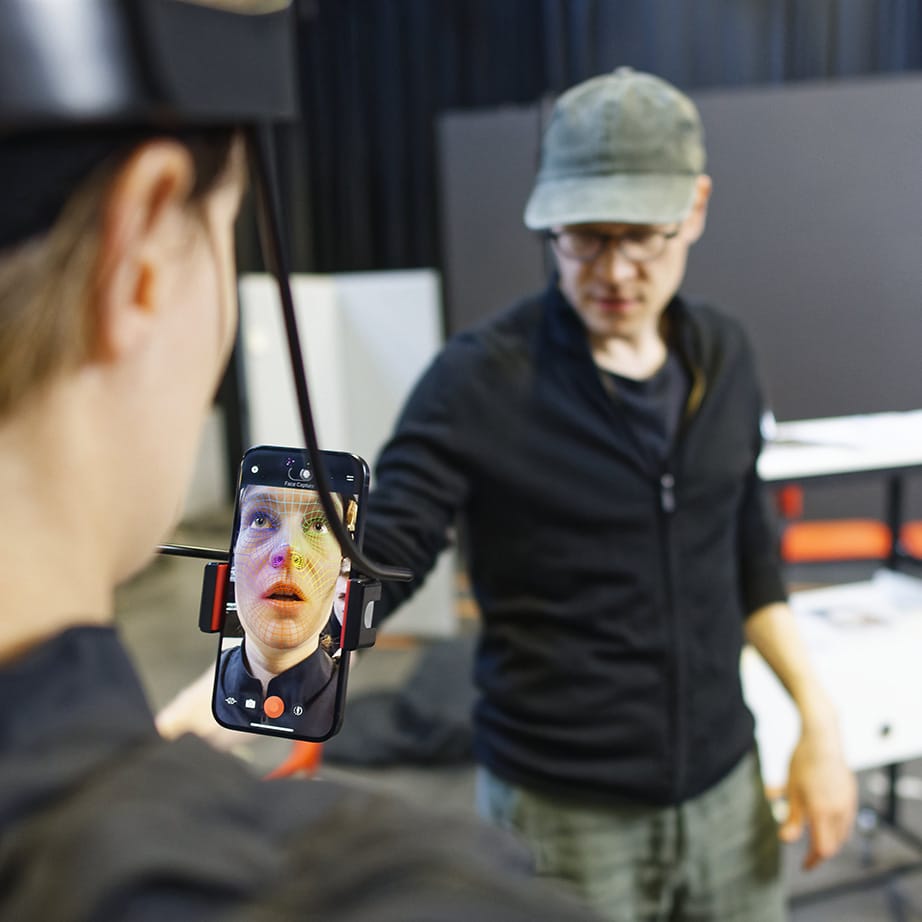
Virtual production is a technology that is renewing the film and audiovisual industry. It combines the game engine used in making video games and the camera connected to it, e.g. the camera that follows the actor’s movements, and the LED wall into a whole, which can be used to create impressive and realistic scenes and sets.

Biodesign Environment
Biodesign Environment
In the Biodesign development and educational environment, ecologically sustainable products are tested and developed. Design, digital planning and manufacturing, and robotics are at the core of the work.
What our work looks like


House of Experiences
In the video, students, teachers and companies in the creative industry share their experiences and views on the effects of virtual production technology on the future of the industry, application possibilities and the benefits of the project.
Civil Protection Forum 2024
Be prepared, the Finnish way. How new technologies can enhance disaster risk prevention and response.
Interactive Game Wall
Video available with English subtitles.
Eighth graders from Eskolanmäki School participated in workshops to design an interactive game wall together with other experts in Kouvola. The game wall was implemented in Kouvola in February 2021.
Networks
Networks are a means of influence and cooperation. We are interested and actively involved in many kinds of networks. In this way, we can influence and highlight the topics of the creative industries more broadly.
What is living lab?
Living labs are real-life testing and experimentation environments that promote co-development and open innovation, involving citizens, public administration, companies and educational institutions equally.
European Network of Living Labs
A Europe-wide, sometimes even wider, network of universities and other entities, which are connected by living lab activities. The network is united by user-oriented development and innovation.
Finnish Network of Living Labs
We coordinate the living lab network of six universities of applied sciences. Included are Xamk, Hamk, Haaga-Helia, Arcada, Savonia and Centria.
Service Design Network
SDN is a leading non-profit service design expertise institution and a driver of global growth, development and innovation.
Cumulus
Cumulus represents a dynamic ecosystem for internationalisation and global mobility, information exchange and cooperation in art and design pedagogy, research and practice.
Kymenlaakso ennakoi
In the local foresight focused network, we anticipate the skills and needs to strengthen the attractiveness and vibrancy of Kymenlaakso.
Kymenlaakson ihme
Kymenlaakso’s forest industry turned 150 years old in 2022. The forest industry born along Kymijoki shaped Kymenlaakso and helped raise the whole of Finland to prosperity and world awareness.
Luova areena
There are about 40 organizations and more than 100 people in the creative industries network of Southeast Finland. The coordinator of the network is Ritva Kaikkonen of Southeast Finland ELY. The network is active and strives to promote the success of the Southeastern Finnish creative economy and goal-oriented networking and cooperation.
Creative industries in Finland
The role of intangible added value is a strong competitive factor regardless of the sector. Creative fields have the ability to embody and express values, concepts and meanings. Sustainable development, social wellbeing and ethics are emphasized as people’s values and attitudes change.
The creative economy is a very significant industry in Finland. It is divided into three groups according to the different nature of their operations, which together employed more than 128,000 people in 2022, included more than 61,000 companies with a combined turnover of 13.7 billion euros.

Source: According to. Business Finland. Tilannekuva luovien alojen ja tapahtuma-alan liiketoiminnasta. VTT Raportti 4/2023.
Find out more about our work

Time for (S) Heroes in fashion, costume design, and art installations for sustainable future, zero waste, digital processes, and co-design

HER TECH – Her Tech, Her Terms. Engagement as the key

Kareva – Enhancing International Recruitment Readiness

Kymenlaakso GoGlo – Global Growth & Business Networks

BioTechDemoDesign – Sustainable Technology and Bio-based Innovations

Learn to Play for the Future

The Big Green
KaakkoACT – Transforming Foresight into Action

Co-Vision

GreenCCIrcle
Recently in our research
Shaping Municipal Futures Together: Experiences from Rantasalmi, Kouvola and Pyhtää

Pasi Karppinen to Strengthen Xamk’s Digital Economy Research

Community‑Driven Sustainable Solutions Explored at the Kemiönsaari Living Lab

Solutions for the Green Transition Explored in Kouvola
Want to know more? Contact us!

