


- Article
- Experience
- News
- Personal story
- Press release
When Technology Takes a Back Seat: AinoClub Combines Digital Tools with Hands-On Learning
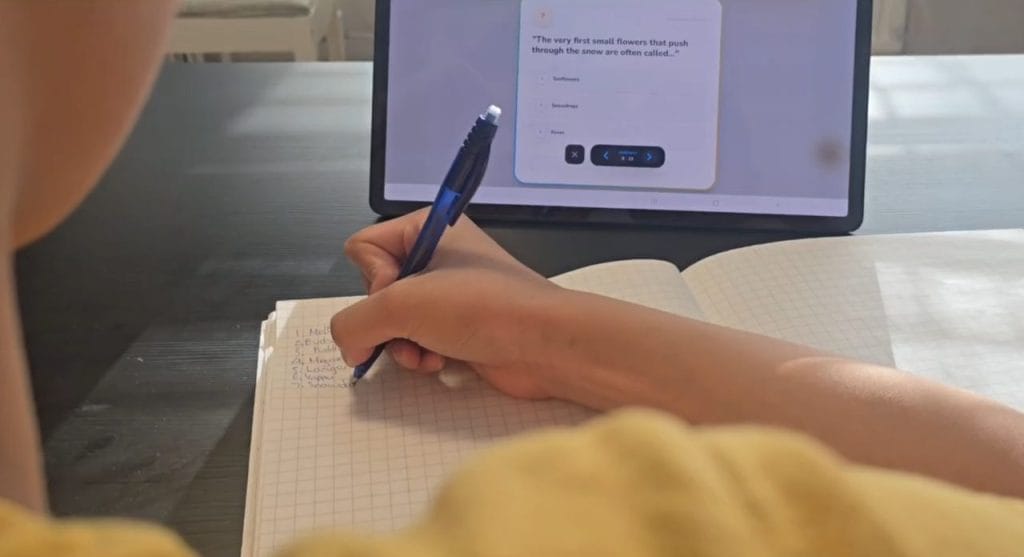
AinoClub is a learning solution developed by an international team and based on the concept of phygital learning – combining physical and digital learning. In this approach, artificial intelligence and digital tools work in the background while children’s attention remains focused on a pencil, paper, drawing, and writing.
Learning Through the Eyes of an Architect
Vincent’s background helps explain why the physical environment and hands-on activities play such an important role in AinoClub. As an architect, urban planner, and university-level lecturer in architecture and interior design, he has explored how the spaces around us shape the way people live, think, and interact with one another.
His teaching work also led to the development of various creativity and ideation frameworks, such as the STREAMS-EDGE THINKING METHODOLOGY. At the heart of these approaches is the idea of technology primarily as a tool: its purpose is not to replace human imagination, but to strengthen it. The same idea is central to AinoClub: technology should enhance a child’s creativity, not replace it.
“AI should work quietly in the background like a supportive assistant,” Vincent explains.
The goal is therefore not to create yet another app that keeps children in front of a screen. Instead, AI works behind the scenes to make learning progress easier to track and feedback easier to provide, while the child focuses on hands-on activities. From AinoClub’s perspective, some of the most important learning tools for children can still be very simple: a pencil and a piece of paper.
From an Idea to a Startup with Support from Xamk
AinoClub’s development has progressed alongside the team’s studies at Xamk and within its startup ecosystem. Game Design studies have provided the team with practical tools for combining learning and gamification. Mechanics familiar from game design, user interface design, and systems thinking have also found their way directly into AinoClub’s product development.
For AinoClub, studying and building a company have gone hand in hand, supporting and strengthening each other. While Vincent has been responsible for the original idea and software architecture, AinoClub’s development has been a multidisciplinary team effort.
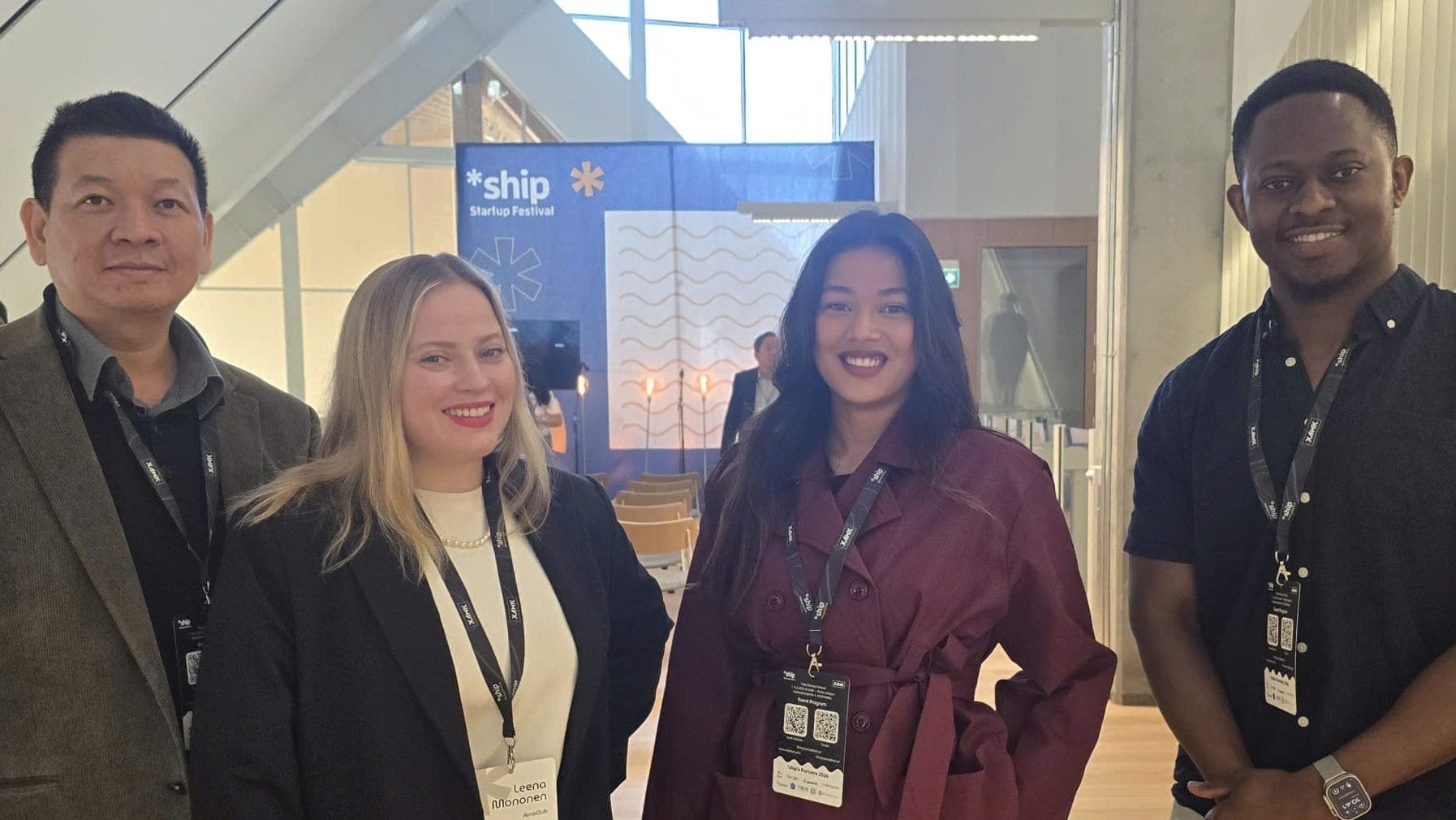
Co-founders Leena, Richard, and Anuradha have contributed expertise in educational communities, empathy and user experience, and marketing, respectively. Their perspectives have helped the team shape the product around children, families, and real-life learning needs
“The key has been synergy rather than separation,” Vincent says.
Course assignments, prototypes, and startup development all support one another. Ideas and solutions developed during studies can also be taken directly into the company’s development work. Xamk’s innovation ecosystem has also played an important role in turning the idea into a business.
In its early stages, AinoClub received support from the Xamk Startup Fund and guidance from experienced mentors. The team particularly highlights the support of Maarit Vahvanen, Mikko Vihanto, Ville Hyyryläinen, the Patteri ES team, and the Kymenlaakso GoGlo project, whose guidance, sparring, and encouragement have supported the team from the early stages of its journey. Through these networks, the team has also gained access to new opportunities, such as the Google Data Center Community AI Fellowship.
International Perspectives as Part of the Product
The international nature of AinoClub’s team is not merely a structural feature of the company. It is also closely connected to the problem the company aims to solve. Team members bring different cultural backgrounds, design perspectives, and areas of technical expertise to the project. For a product designed to support multilingual families, this diversity is an important strength.
The team members have personal experience of situations where a child is learning Finnish while the family’s own native language and cultural background remain strongly present in everyday life. AinoClub aims to take this whole picture into account: learning, language development, hands-on activities, and the strengthening of children’s fine motor skills.
Building the company in Finland provides an interesting environment for this work. Vincent describes Finland as a frontrunner in child-centred education and pedagogical trust. At the same time, the Finnish educational environment sets a high standard for a young learning technology company.
The First Win Strengthened Belief in the Idea
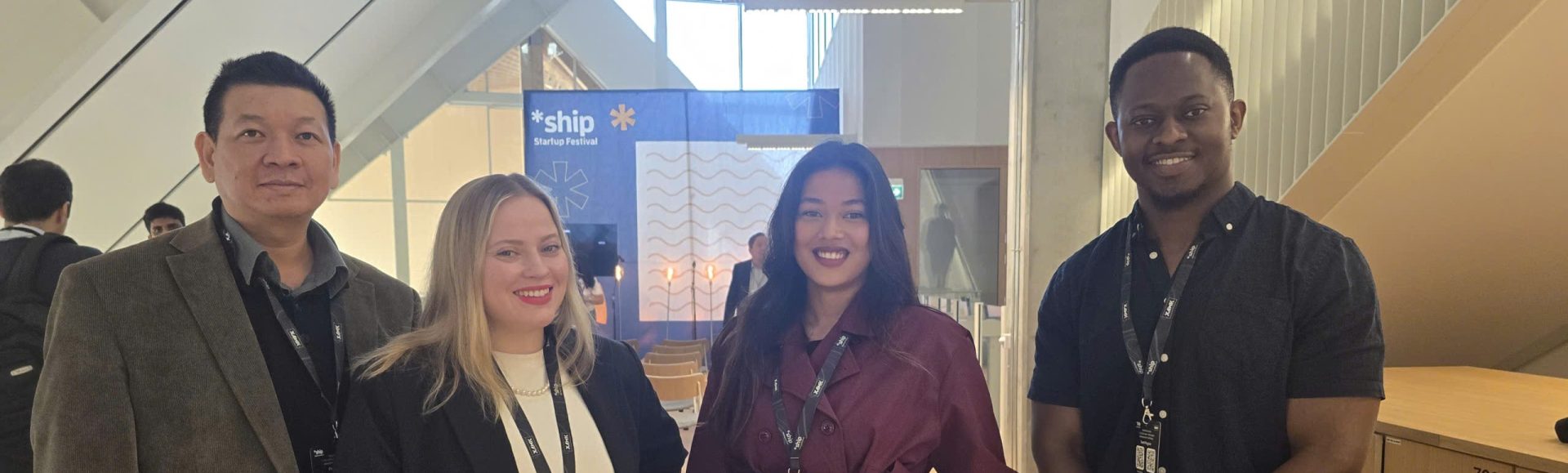
One of the most significant milestones in AinoClub’s journey was winning first place in the Takomo Startup Bootcamp, along with the Golden Ticket to the *ship Startup Festival. For the team, the success in the competition provided important external validation for the idea.
AinoClub started with a prototype developed for the founders’ own family. The competition showed that the idea of combining digital tools, handwriting, and learning also resonated with a wider audience – including parents, teachers, and other members of the startup community.
The team identifies one key lesson from the competition journey: it is better to fall in love with the user’s problem than with your own technology. The same principle is reflected in how AinoClub is presented. Instead of putting complex artificial intelligence at the centre, the focus is on a concrete benefit: a child proudly writing on paper, and a parent receiving information about the child’s learning without any extra effort
The First Users Are Already on Board
AinoClub’s concept has already been tested in practice through an alpha pilot involving 15 families. During the pilot, the families completed more than 800 offline activities, providing the team with valuable insights for further product development. The company’s next focus is on developing the product and taking the next steps towards growth.
The team is participating as a finalist in the Student Track of the Dream Startup 2026 event and continues its work in the Google Data Center Community AI Fellowship. Among other things, the fellowship aims to support the development of AinoClub’s cloud-based backend system.
Locally, AinoClub plans to organise funded Basecamp workshops in the Kotka and Hamina area. Through these workshops, the company aims to bring families and education professionals together and gather feedback for further product development. In the longer term, AinoClub is aiming for seed funding and expansion into the Nordic countries.
Everything Doesn’t Have to Be Ready Before the First Step
AinoClub’s story shows how studies can provide a starting point for building a company – and how developing a company can, in turn, deepen the learning process.
Vincent’s message to other Xamk students is simple: an idea does not have to be finished before it can be tested in the real world.
It is worth building the simplest possible prototype, getting it into the hands of real users as quickly as possible, and listening carefully to what they have to say about it. At the same time, students should make use of the networks around them and ask for help at an early stage.
Startup competitions, funding opportunities, mentors, and Xamk’s entrepreneurship ecosystem provide concrete opportunities to move an idea forward. You do not have to know or do everything on your own. For AinoClub, the journey is only just beginning.
Also check out these articles
From Coffee to Spruce Shoots – New Paths to Growth from Local Strengths

How does breathing influence brain-body interaction in elite adolescent ice hockey players?